During the mid 1880's a series of patent's for non magnetic alloys for balance springs and balances were granted to Charles-Auguste Paillard who had experimented with gold and palladium alloys. Pocket watches marked "Paillard’s patent" were made by the “Non-Magnetic Watch Co. of America” from 1887 and a history of the firm can be found in NAWCC Bulletin June 1990.
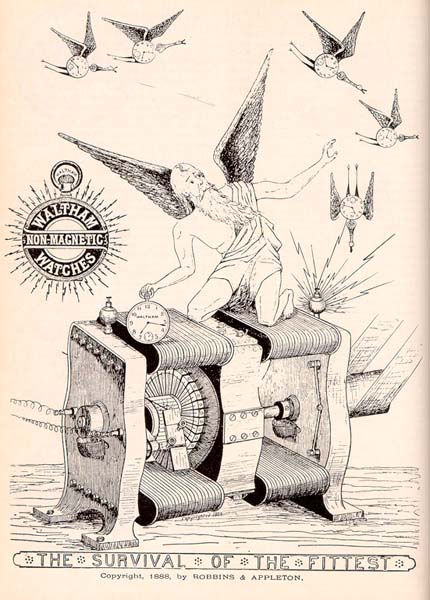
Some other watch companies invented or used similar alloys for balances and balance springs with Waltham being the most prominent using patents by Daniel O’Hara, Daniel W. Eldredge and John Logan and advertised their non-magnetic watches extensively.
Reproduced in "American Pocket Watches - Identification and
Price Guide" by Ehrhardt & Meggers.
At this time IWC watches also produced watches with non-magnetic balances and or balance springs and these were stamped with the non-magnetic patent number and some were also stamped "Non-magnetic" or "Antimagnétique". Five different stampings are known:
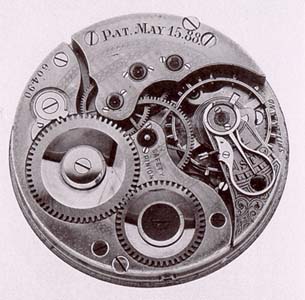
1. PAT. MAY 15. 88.
2. NONMAGNETIC PAT. 11939
3. NONMAGNETIC WATCH, PAT MAI 15, AUG 21, 1888
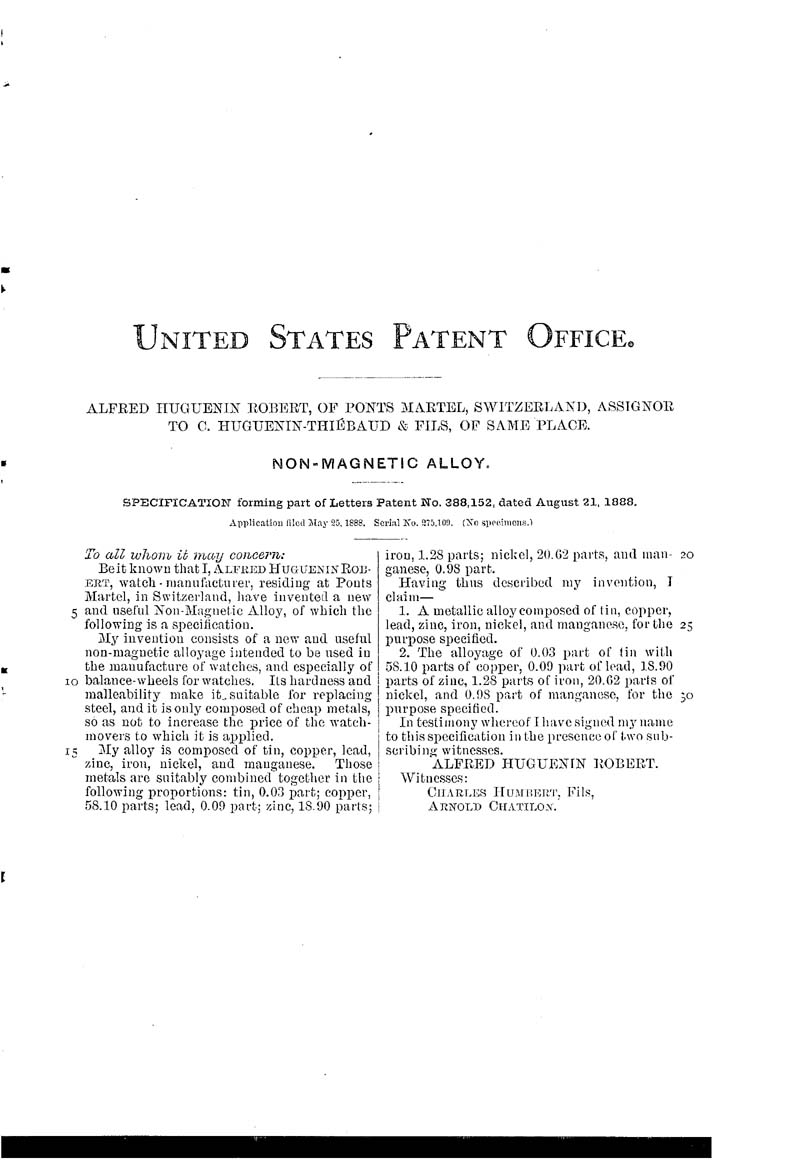
4. PAT. 21 AUG. 88, 388152
5. Antimagnétique
The first four markings have only been found on the Savonette Calibre 58 (later c.56) and Lépine Calibre 57 'americaine", while the "Antimagnétique" marking has only been seen on Calibre 52/53 movements.
Tölke and King, page 228 in reference to the markings,
"NONMAGNETIC WATCH, PAT MAI 15, AUG 21, 1888" indicate the
markings refer to the patents of the Non-Magnetic Watch Co. ie.
Paillard's patents. There is a sound basis for this suggestion for
we know from Tölke and King, page 65, "The founders of the
Nonmagnetic Watch Co. of New York and Geneva planned to exploit
this situation on a large scale by acquiring a Swiss factory for
the express purpose of setting up non-magnetic watch production;
amoung others they considered the 'Internationale Uhrenfabrik J.
Rauschenbach' (J. Rauschenbach's International Watch Factory).
Johannes Vogel had in fact developed 16 ligne and 19 ligne
calibres as samples for this company in 1888". We know the merger
with the Nonmagnetic Watch Co. didn't take place because of the
"insistence of a cash payment instead of the 500,000 Francs' worth
of shares offered by the latter company" (see Tölke and King,
page 42). The question is whether the markings above refer to
Paillard's patents?
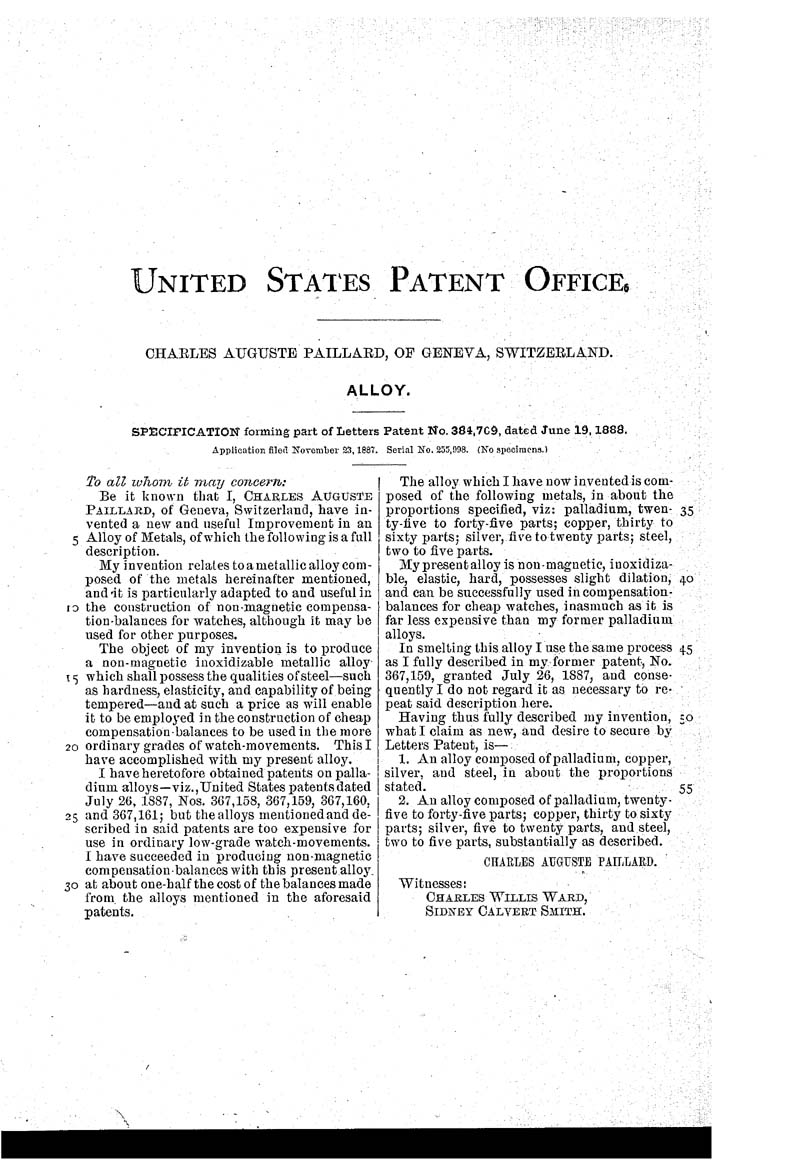
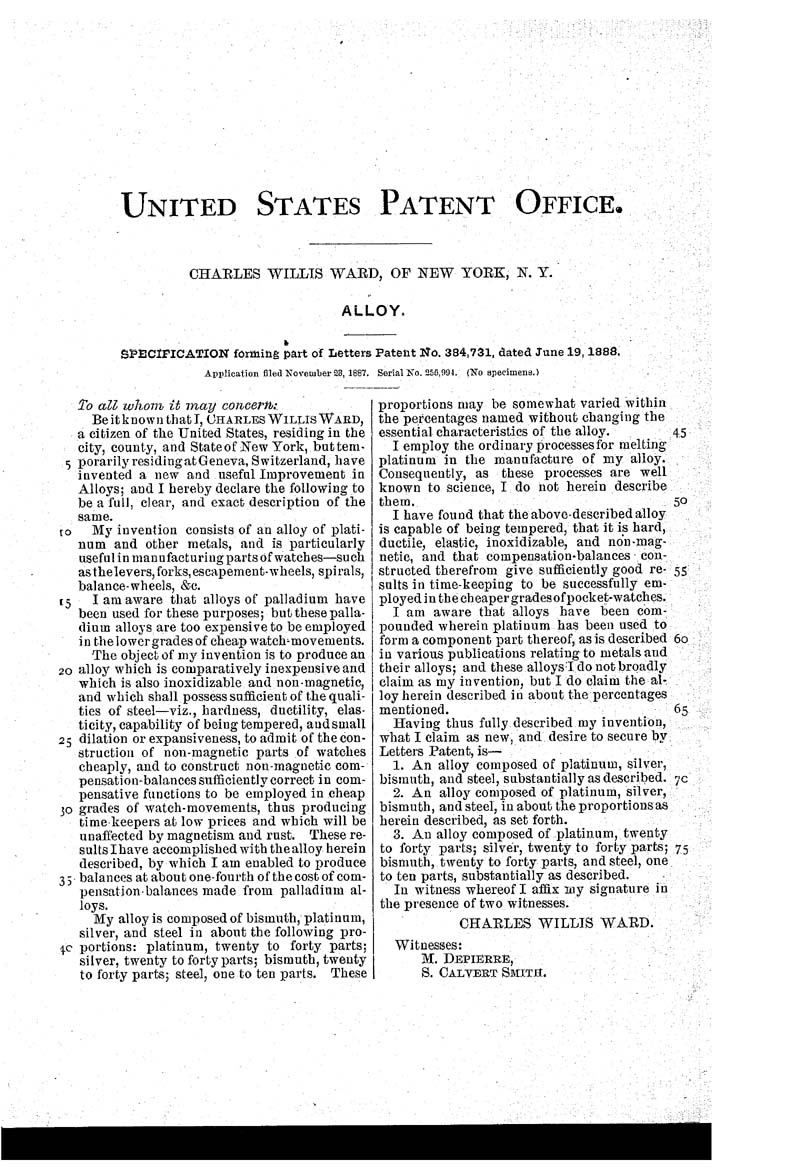
There is further Paillard US patent (# 384709) dated June 19, 1888 for a lesser grade of alloy to be used “in the construction of cheap compensation balances to be used in the more ordinary grades of watch-movements.” Also dated the same day is a patent (# 384731) for platinum balances, rather than palladium, by Charles Willis Ward who was a witness to Paillard’s patent and the General Manager and Secretary of the Non Magnetic Watch Co.
In summary, Paillard’s patents are dated March 8, 1887, July 26,
1887 and June 19, 1888 in the United States and equivalent patents
dated July 3 1886 and May 11, 1886 for Great Britain, France and
Germany. The Swiss patent system did not begin until 1888. None of
these dates or patent numbers correspond with the markings on the
IWC watch movements.
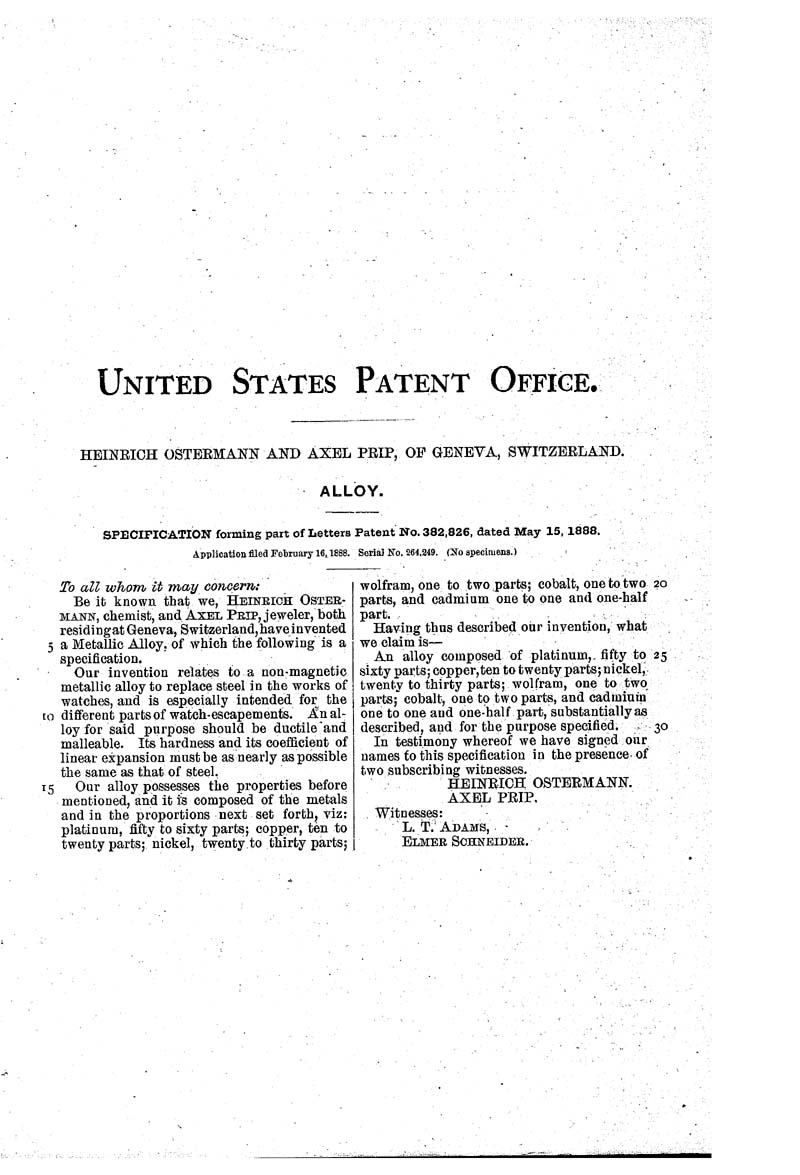
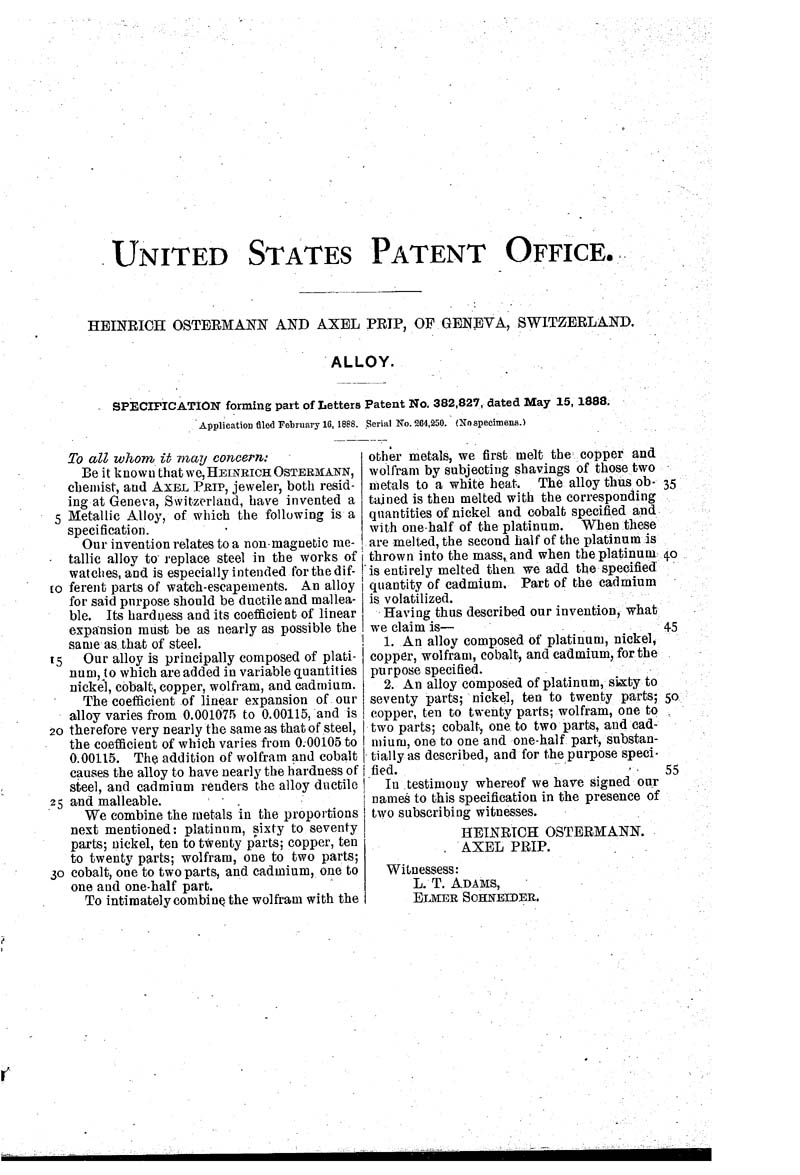
There are two United States patents for alloys (mainly platinum),
“especially intended for the different parts of
watch-escapements” dated May 15, 1888.The patent holders of # 382826 and # 382827
are Heinrich Ostermann, chemist and Axel Prip, jeweler of Geneva,
Switzerland. These two patents would appear to be based on Germany
patent number 44473 dated 18 December
1887 which is more specific in the composition of the alloy.
NONMAGNETIC PAT. 11939 - Sav.c.58 19lig H7 americaine
(c.56)
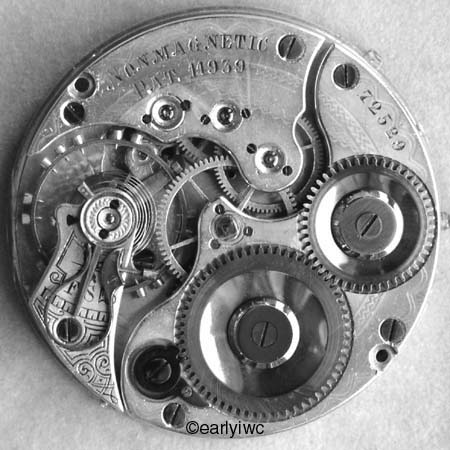
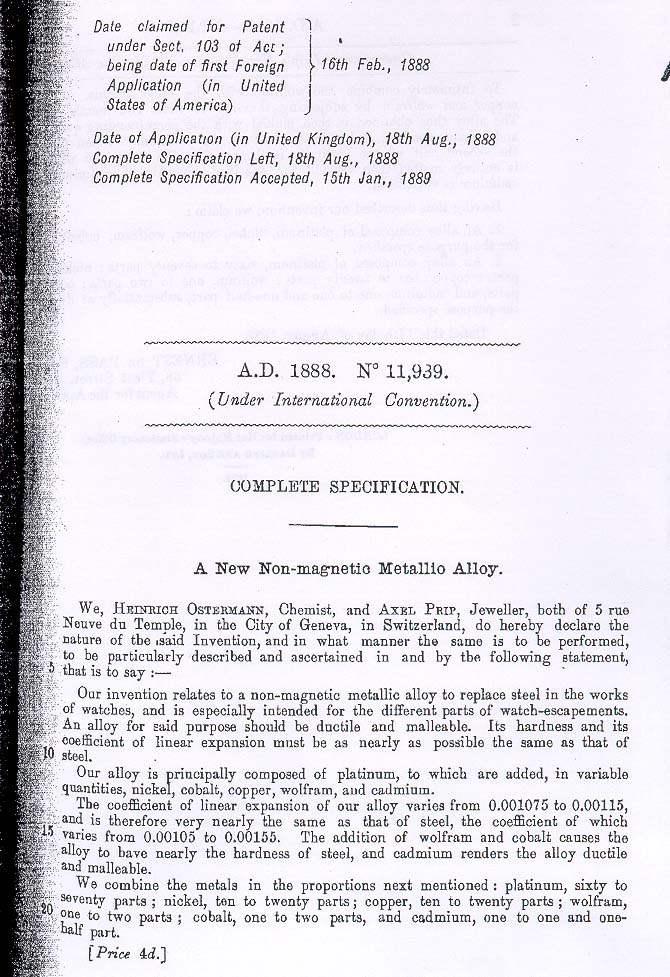
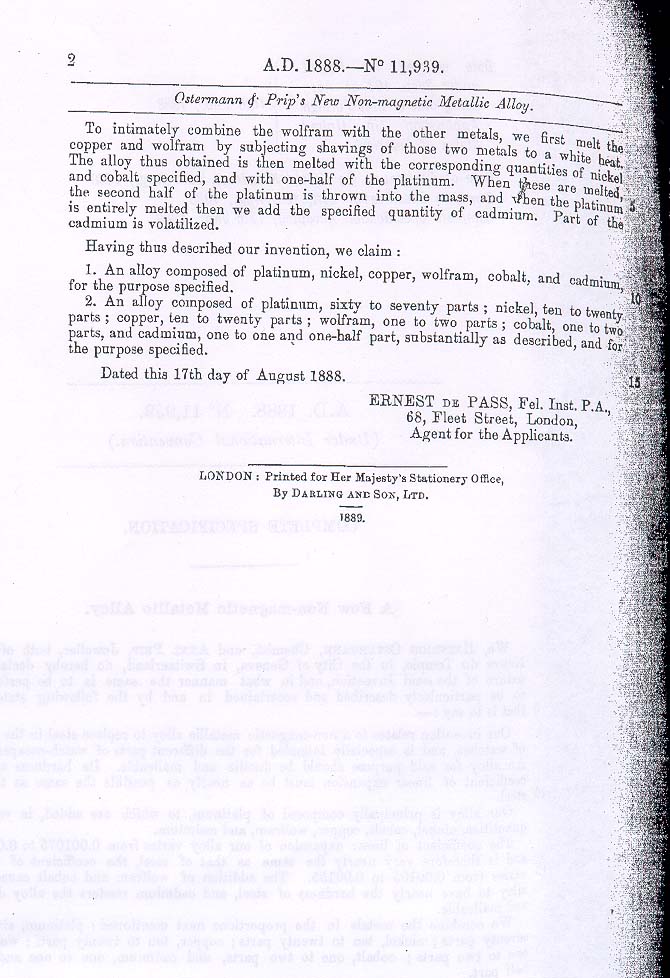
British patent 11939 of 1888 is for 'A new non-magnetic metallic alloy' in the name of Heinrich Ostermann and Alex Prip. The patent is dated 18 August 1888 (page 1 and page 2). The alloy was principally composed of platinum.
After an exhaustive search for Patent 11939 at both the European
Patent Office and United States Patent and Trademark Office it was
finally found by the British Library (a big thanks to Julie
Simpkin).
NONMAGNETIC WATCH, PAT MAI 15, AUG 21, 1888 (Tölke and King, illustration 249, page 228, also in Meis page 79) - Sav. C.58 19lig H7 americaine (c.56)
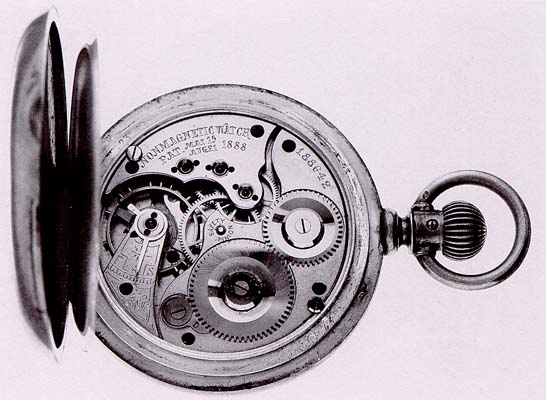
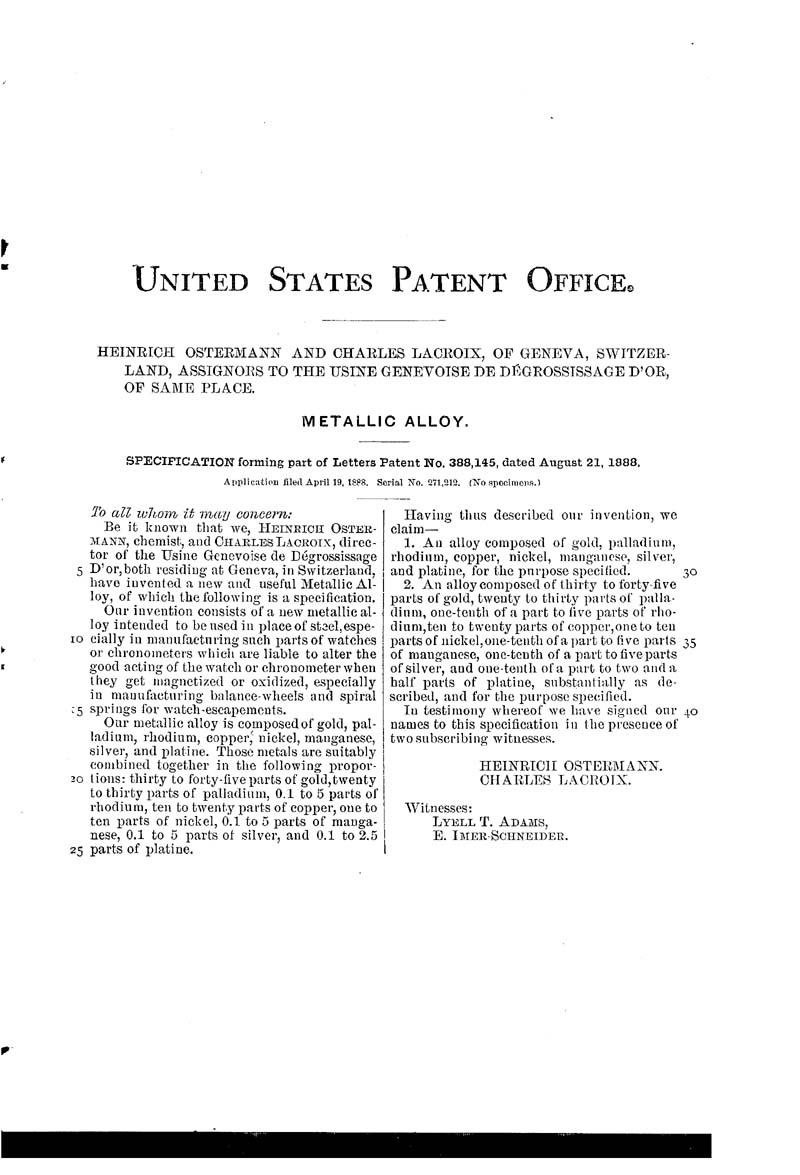
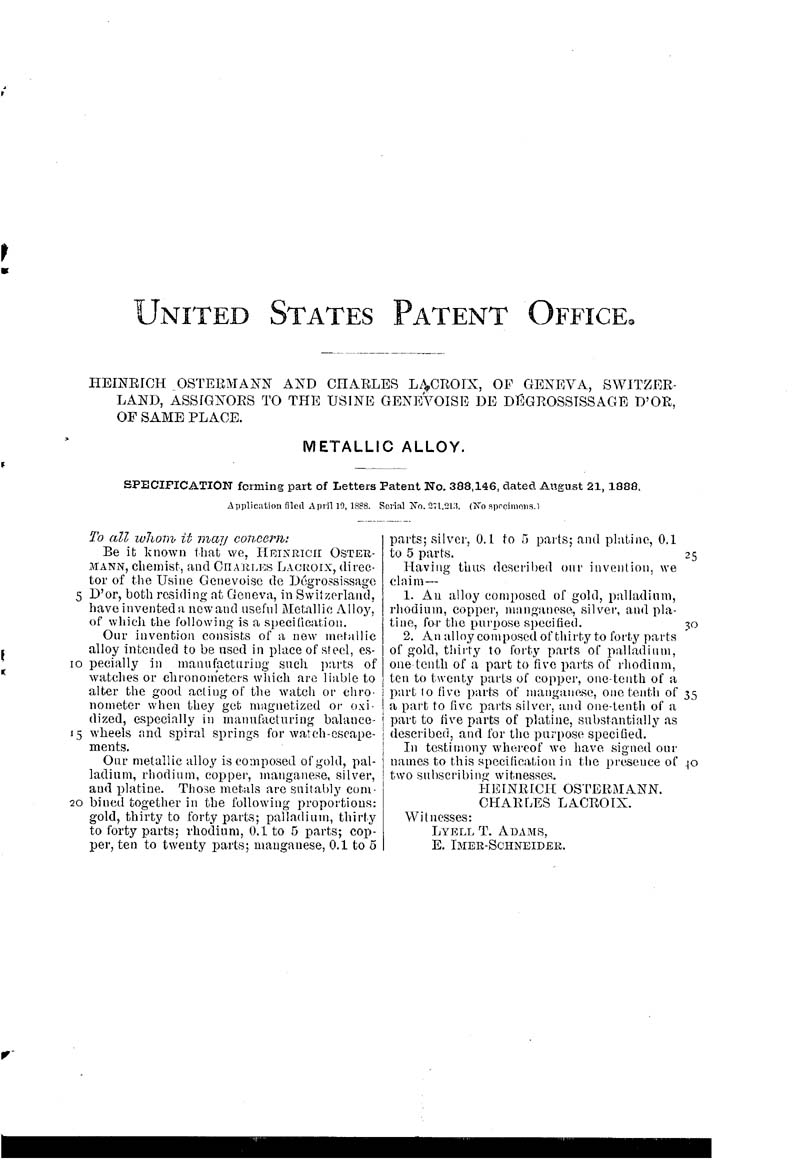
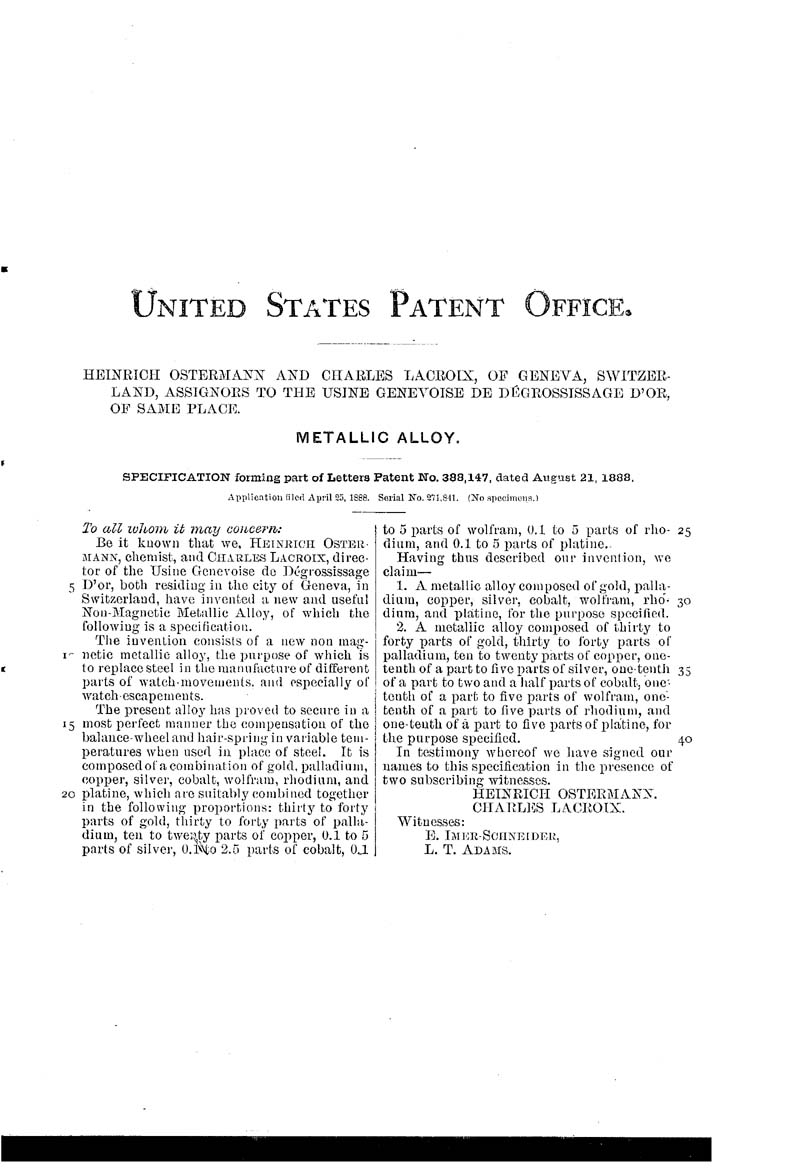
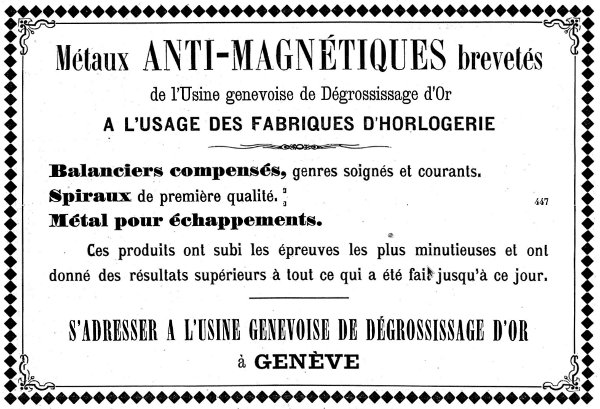
On August 21, 1888, Heinrich Ostermann, chemist and Charles Lacroix (director of the 'Usine Genèvoise de Dégrossissage D’or', a Paillard competitor, see Tölke and King page 65) registered three patents with the United States Patent Office, # 388145, # 388146, # 388147. These patents are for a metallic alloy (mainly gold and palladium) for watch escapements of which the last specifically refers to a non-magnetic metallic alloy. I would think that Heinrich Ostermann role in the above patents and the involvement of Usine Genèvoise de Dégrossissage D’or, would have seen the patents assigned to that company.
PAT. 21 AUG. 88, 388152 (Meis illustration 92, page 78, this image appears to be from Fournitures # 1, page 20) - Sav. c.58 19lig H7 americaine (c.56)
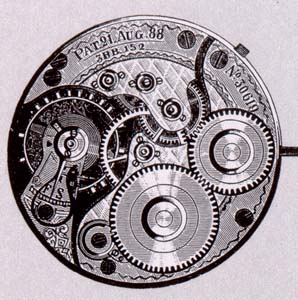
Also on August 21, 1888, at the United States Patent Office there
was a further patent registered for non-magnetic alloy. Alfred
Huguenin Robert, of Ponts Martel, Switzerland registered patent #
388152 and assigned it to C.
Huguenin-Thiébaud & Fils, also of Ponts Martel. The
composition of this alloy was mainly copper with no platinum or
palladium. My understanding was that C. Huguenin-Thiébaud
made tools for the watch industry including machines to make
balances.

Antimagnétic (Tölke and King, illustration 250, page 228) - Lep. c.52 19lig H7
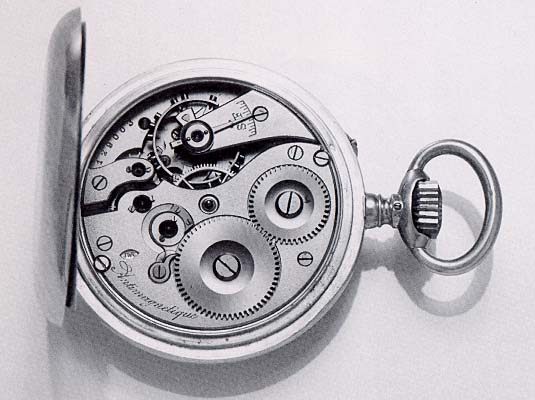
This watch is simply marked "Antimagnetic" with no patent
numbers. Given that IWC mainly used the patents of Ostermann and
Prip/Usine Genèvoise de Dégrossissage D’or, I would
think that the balance/balance spring conforms to one of
their patents.
Greg Steer, May 2006

If you are interested in how temperature and magnatism affects the balance and the balance spring and what the future may hold, here is an excellent article in PDF format: A New Material for Balance Springs
"American Watchmaking, A Technical History of the American Watch Industry 1850 – 1930”, Michael Harrold,
European Patent Office: http://ep.espacenet.com
"IWC-Uhren", Reinhard Meis, Carinthia, 1985
"IWC International Watch Co. Schaffhausen", Hans Tölke and
Jürgen King, Verlag Ineichen, Zurich, 1987.
"Journal La Federation Horlogere", Various, 1889
"Patents for Inventions, Abridgement of Specifications, Class 139, Watches, Clocks and Other Timekeepers. Period A.D. 1855-1930", Odmark, Albert, Odmark, Seattle, 1979
The British Library: http://www.bl.uk/
"The Non-Magnetic Watch Company - Chronology", Eugene T. Fuller, NAWCC Bulletin June 1990
United States Patent and Trademark Office: www.uspto.gov